Buy valueinvesting.eu ?
We are moving the project
valueinvesting.eu .
Are you interested in purchasing the domain
valueinvesting.eu ?
domain@kv-gmbh.de · 0541-91531010
Buy valueinvesting.eu ?
Who discovered Uranus?
Uranus was discovered by the German-born British astronomer Sir William Herschel on March 13, 1781. Herschel initially thought he had discovered a comet, but further observations revealed that it was actually a new planet. This discovery expanded the known boundaries of the solar system and was a significant contribution to the field of astronomy. **
Is that already Uranus?
No, that is not Uranus. Uranus is the seventh planet from the Sun in our solar system, and it is not visible to the naked eye from Earth. If you are looking at a celestial object and wondering if it is Uranus, it is likely not, as it would require a telescope to see it. **

Similar search terms for Uranus
Top-Angebote
Products related to Uranus:
-
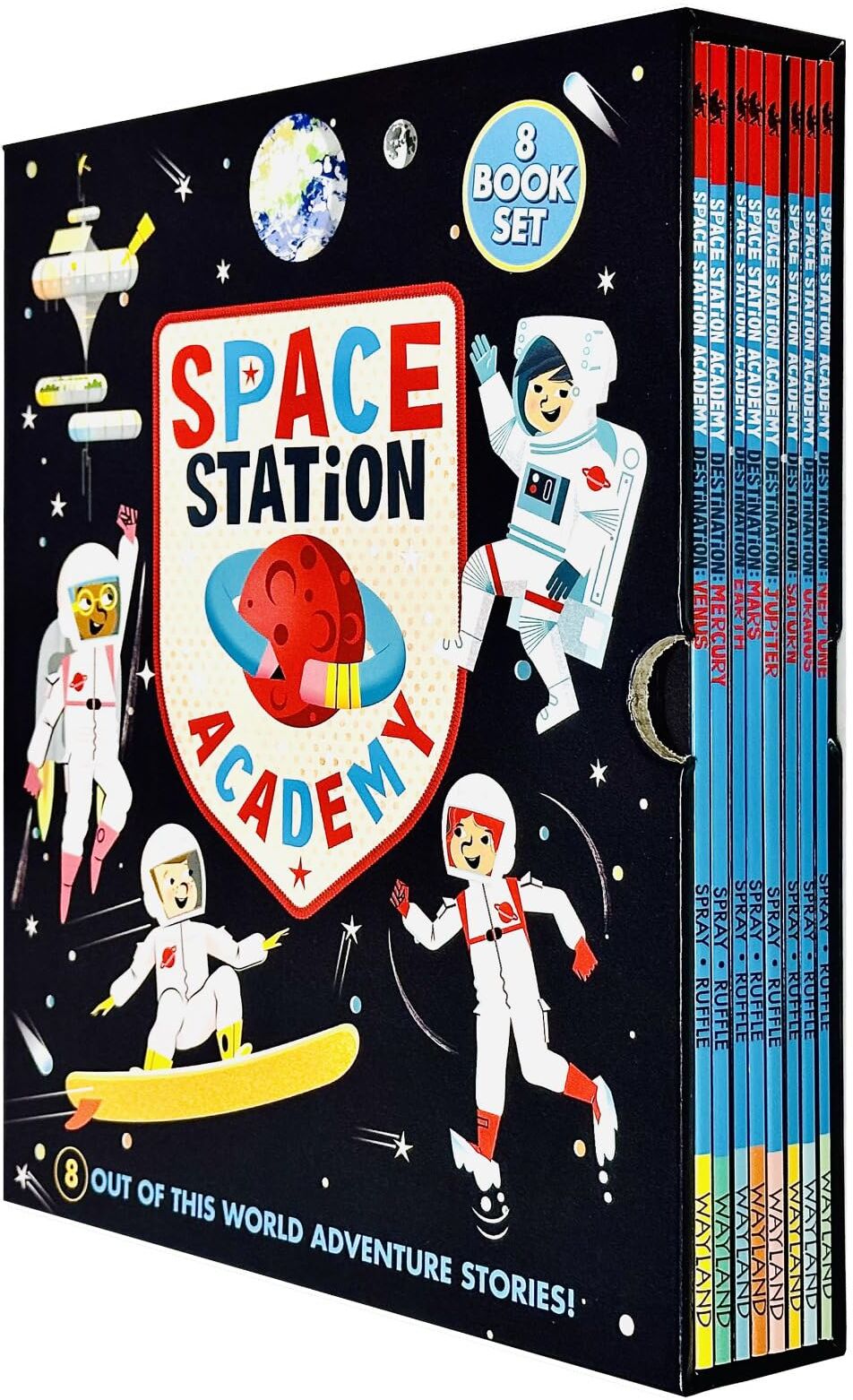
Wayland ltd Space Station Academy Series Collection 8 Books Set By Sally Spray (Destination Venus, Mercury, Earth, Mars, Jupiter, Saturn, Uranus and Neptune)Space Station Academy Series Collection 8 Books Set By Sally Spray (Destination Venus, Mercury, Earth, Mars, Jupiter, Saturn, Uranus and Neptune) Destination Venus: Join the Space Station Academy students on their expedition to Venus where they'll learn about the turbulent weather systems and discover pancake dome volcanoes on this rocky planet, all while bouncing around in space bubbles. Destination Mercury: Mercury where they'll explore giant craters, dodge meteorites and find out that they can jump three times higher on this planet than on Earth! Destination Earth: Earth where they'll whiz past volcanoes, mountains and waterfalls, learning about the planet's core layers, and how it spins on an axis. Destination Mars: The students are off on an expedition to Mars where they'll uncover clues about life on the planet, learn what makes Mars red, explore volcanoes and catch up with the Mars rover that roams the planet's crusty canyons. Destination Jupiter: Jupiter where they'll cruise moon craters on skateboards and discover why Jupiter is stripy and covered in spots. Destination Saturn: Saturn where they'll learn about the planet's stormy weather, how soot particles are turned into diamonds and how to draw the pebble shaped moons that orbit Saturn. Destination Uranus: Uranus where they'll test their strength, lifting rocks on moon Oberon, parachute off an icy cliff edge on moon Miranda, learn what makes the planet blue and catch a whiff of the gassy atmosphere. Destination Neptune: Neptune where they'll find out what gives the ice giant its blue colour, learn about the sparkling ocean of diamonds that may exist at Neptune's rock core and use their jetpacks to navigate around some exploding geysers.14,39 £*Shipping: 2,99 £Secure redirect to the provider
-
Penguin Feel Great Lose Weight: Long term, simple habits for lasting and sustainable weight lossTHE LATEST BOOK FROM THE AUTHOR OF THE SUNDAY TIMES #1 BESTSELLER FEEL BETTER IN 5'This is not a diet book. This is a whole new way of looking at what, why and how we eat and helps you design your own plan to build a better, healthier relationship with food' Fearne Cotton'A book with practical simple tips for everyone!' Tim Spector'It is a beautiful book and has so much in it to help us feel good and prioritise our happiness and health' Dr Gemma Newman'One of the most influential doctors in the country' Chris Evans _________________________________________________________________________It's more important than ever before that we get in shape, stay healthy and live well - Dr Chatterjee is back to show you how. Weight loss isn't a race. It isn't one size fits all. Drawing on twenty years of experience as a GP, Dr Rangan Chatterjee has created a conscious, long-lasting approach to weight loss that goes far beyond fad diets and helps to find the best solutions that work for you. Packed with quick and easy interventions this book will help you: 1. Understand the effects of what, why, when, where and how we eat2. Discover the root cause of your weight gain3. Nourish your body without any crash diets or gruelling workouts 4. Build a toolbox of techniques to help you lose weight, for goodWith Feel Great, Lose Weight you can make sustainable, medically-approved lifestyle changes and become a more energised, confident and healthy you. _________________________________________________________________________ 'A blame-free book' Telegraph'This book is extremely practical, insightful and easy-to-follow' The Happy Pears12,95 £*Shipping: 2,99 £Secure redirect to the provider



-
Could that be Uranus?
Yes, it is possible that the object in question could be Uranus. Uranus is the seventh planet from the Sun and is visible to the naked eye under dark sky conditions. It has a distinct bluish-green color and can be identified by its unique appearance compared to other stars and planets. To confirm if the object is Uranus, one can use a star chart or a stargazing app to locate its position in the night sky. **
-
Does the planet Uranus stink?
Yes, the planet Uranus does have a distinct odor. The upper atmosphere of Uranus contains hydrogen sulfide, which gives the planet its characteristic rotten egg smell. This odor was confirmed by observations made by the Gemini North telescope in 2018. So, while we can't physically smell Uranus from Earth, scientists have determined that it does indeed stink. **
-
How many moons does Uranus have?
Uranus has 27 known moons. These moons are divided into three groups based on their characteristics: inner moons, major moons, and irregular moons. The largest moons of Uranus are named Titania and Oberon. **
-
What is the joke about Uranus?
The joke about Uranus is often a play on words, as the name of the planet sounds similar to the phrase "your anus." This leads to humorous puns and jokes about the pronunciation and spelling of the planet's name. It is a light-hearted and commonly used joke in popular culture and among those interested in astronomy. **


What is the model of Uranus?
Uranus is a gas giant planet, similar to Jupiter and Saturn. It has a thick atmosphere primarily composed of hydrogen and helium, with traces of methane. The planet has a unique feature in that its axis of rotation is tilted almost 90 degrees, causing it to essentially roll on its side as it orbits the Sun. This unusual tilt gives Uranus its distinct appearance and also leads to extreme seasonal variations on the planet. **
Could Uranus collide with our Earth?
The chances of Uranus colliding with Earth are extremely low. Uranus is located about 1.6 billion miles away from Earth, and the two planets follow different orbits around the Sun. The gravitational forces and vast distances between the two planets make a collision highly unlikely. Additionally, the orbits of the planets are stable and have been so for billions of years, making the likelihood of a collision even more remote. **
Top-Angebote
Products related to Uranus:
-
Tapestry Strategy Board Game for Players Who Enjoy Civilisation Building, Exploration and Long-Term Planning by Stonemaier GamesBuild a civilization across the ages in Tapestry, a strategy board game. Players create and develop a unique civilization, guiding it from the earliest days of humankind into the future. Each civilization follows its own path, shaped by the choices made throughout the game. Explore new territories, advance your technology, develop your capital city, and expand your civilization's influence. The routes available to you can vary considerably, offering a different strategic challenge from one game to the next. This game is perfect for players who enjoy civilization building, exploration, and long-term planning.78,19 £*Shipping: 0,00 £Secure redirect to the provider
-
Wayland ltd Space Station Academy Series Collection 8 Books Set By Sally Spray (Destination Venus, Mercury, Earth, Mars, Jupiter, Saturn, Uranus and Neptune)Space Station Academy Series Collection 8 Books Set By Sally Spray (Destination Venus, Mercury, Earth, Mars, Jupiter, Saturn, Uranus and Neptune) Destination Venus: Join the Space Station Academy students on their expedition to Venus where they'll learn about the turbulent weather systems and discover pancake dome volcanoes on this rocky planet, all while bouncing around in space bubbles. Destination Mercury: Mercury where they'll explore giant craters, dodge meteorites and find out that they can jump three times higher on this planet than on Earth! Destination Earth: Earth where they'll whiz past volcanoes, mountains and waterfalls, learning about the planet's core layers, and how it spins on an axis. Destination Mars: The students are off on an expedition to Mars where they'll uncover clues about life on the planet, learn what makes Mars red, explore volcanoes and catch up with the Mars rover that roams the planet's crusty canyons. Destination Jupiter: Jupiter where they'll cruise moon craters on skateboards and discover why Jupiter is stripy and covered in spots. Destination Saturn: Saturn where they'll learn about the planet's stormy weather, how soot particles are turned into diamonds and how to draw the pebble shaped moons that orbit Saturn. Destination Uranus: Uranus where they'll test their strength, lifting rocks on moon Oberon, parachute off an icy cliff edge on moon Miranda, learn what makes the planet blue and catch a whiff of the gassy atmosphere. Destination Neptune: Neptune where they'll find out what gives the ice giant its blue colour, learn about the sparkling ocean of diamonds that may exist at Neptune's rock core and use their jetpacks to navigate around some exploding geysers.14,39 £*Shipping: 2,99 £Secure redirect to the provider
-
Who discovered Uranus?
Uranus was discovered by the German-born British astronomer Sir William Herschel on March 13, 1781. Herschel initially thought he had discovered a comet, but further observations revealed that it was actually a new planet. This discovery expanded the known boundaries of the solar system and was a significant contribution to the field of astronomy. **
-
Is that already Uranus?
No, that is not Uranus. Uranus is the seventh planet from the Sun in our solar system, and it is not visible to the naked eye from Earth. If you are looking at a celestial object and wondering if it is Uranus, it is likely not, as it would require a telescope to see it. **
-
Could that be Uranus?
Yes, it is possible that the object in question could be Uranus. Uranus is the seventh planet from the Sun and is visible to the naked eye under dark sky conditions. It has a distinct bluish-green color and can be identified by its unique appearance compared to other stars and planets. To confirm if the object is Uranus, one can use a star chart or a stargazing app to locate its position in the night sky. **
-
Does the planet Uranus stink?
Yes, the planet Uranus does have a distinct odor. The upper atmosphere of Uranus contains hydrogen sulfide, which gives the planet its characteristic rotten egg smell. This odor was confirmed by observations made by the Gemini North telescope in 2018. So, while we can't physically smell Uranus from Earth, scientists have determined that it does indeed stink. **
Similar search terms for Uranus
-
Penguin Feel Great Lose Weight: Long term, simple habits for lasting and sustainable weight lossTHE LATEST BOOK FROM THE AUTHOR OF THE SUNDAY TIMES #1 BESTSELLER FEEL BETTER IN 5'This is not a diet book. This is a whole new way of looking at what, why and how we eat and helps you design your own plan to build a better, healthier relationship with food' Fearne Cotton'A book with practical simple tips for everyone!' Tim Spector'It is a beautiful book and has so much in it to help us feel good and prioritise our happiness and health' Dr Gemma Newman'One of the most influential doctors in the country' Chris Evans _________________________________________________________________________It's more important than ever before that we get in shape, stay healthy and live well - Dr Chatterjee is back to show you how. Weight loss isn't a race. It isn't one size fits all. Drawing on twenty years of experience as a GP, Dr Rangan Chatterjee has created a conscious, long-lasting approach to weight loss that goes far beyond fad diets and helps to find the best solutions that work for you. Packed with quick and easy interventions this book will help you: 1. Understand the effects of what, why, when, where and how we eat2. Discover the root cause of your weight gain3. Nourish your body without any crash diets or gruelling workouts 4. Build a toolbox of techniques to help you lose weight, for goodWith Feel Great, Lose Weight you can make sustainable, medically-approved lifestyle changes and become a more energised, confident and healthy you. _________________________________________________________________________ 'A blame-free book' Telegraph'This book is extremely practical, insightful and easy-to-follow' The Happy Pears12,95 £*Shipping: 2,99 £Secure redirect to the provider
-
La Biosthetique Long Hair Growth Booster 95mlLa Biosthetique Long Hair Growth Booster is a potent formula to encourage healthy hair growth by targeting the roots. Keratin building blocks stimulate the hair roots, while an energy mix of glycogen and creatine significantly increases their cell activity*. This increases the hair’s growth rate by 67%**. Trace elements from coral and biotin result in healthy growth and boost the formation of stable, strong hair.Enriched with Wheat bran extract to help reduce the deposition of pollution particles on the scalp promoting a healthy scalp and healthy hair. *According to an in vitro study, the cell division rate increases by more than 98% compared to a placebo solution, source: BASF AG raw materials documentation **Result of a clinical study compared to a placebo solution, source: Sederma GmbH Key Ingredients • The keratin building blocks arginine, lysine and aspartic acid • Energy mix of glycogen and creatine • Trace elements of coral and biotin • Apigenin, oleanolic acid, Vitamin B12 • Wheat bran extract63,25 £*Shipping: 0,00 £Secure redirect to the provider
-
How many moons does Uranus have?
Uranus has 27 known moons. These moons are divided into three groups based on their characteristics: inner moons, major moons, and irregular moons. The largest moons of Uranus are named Titania and Oberon. **
-
What is the joke about Uranus?
The joke about Uranus is often a play on words, as the name of the planet sounds similar to the phrase "your anus." This leads to humorous puns and jokes about the pronunciation and spelling of the planet's name. It is a light-hearted and commonly used joke in popular culture and among those interested in astronomy. **
-
What is the model of Uranus?
Uranus is a gas giant planet, similar to Jupiter and Saturn. It has a thick atmosphere primarily composed of hydrogen and helium, with traces of methane. The planet has a unique feature in that its axis of rotation is tilted almost 90 degrees, causing it to essentially roll on its side as it orbits the Sun. This unusual tilt gives Uranus its distinct appearance and also leads to extreme seasonal variations on the planet. **
-
Could Uranus collide with our Earth?
The chances of Uranus colliding with Earth are extremely low. Uranus is located about 1.6 billion miles away from Earth, and the two planets follow different orbits around the Sun. The gravitational forces and vast distances between the two planets make a collision highly unlikely. Additionally, the orbits of the planets are stable and have been so for billions of years, making the likelihood of a collision even more remote. **
* All prices are inclusive of VAT and, if applicable, plus shipping costs. The offer information is based on the details provided by the respective shop and is updated through automated processes. Real-time updates do not occur, so deviations can occur in individual cases. ** Note: Parts of this content were created by AI.