Buy valueinvesting.eu ?
We are moving the project
valueinvesting.eu .
Are you interested in purchasing the domain
valueinvesting.eu ?
domain@kv-gmbh.de · 0541-91531010
Buy valueinvesting.eu ?
Has there ever been hyperinflation in Germany?
Yes, Germany experienced hyperinflation in the early 1920s, particularly in 1923. This hyperinflation was a result of the economic turmoil following World War I and the government's decision to print large amounts of money to pay off war debts. The hyperinflation led to a rapid devaluation of the German mark, causing prices to skyrocket and leading to severe economic hardship for the German people. This period of hyperinflation had a lasting impact on the country's economy and contributed to the social and political instability of the time. **
Why is no one doing anything about the hyperinflation?
There are several reasons why no one is effectively addressing hyperinflation in some countries. First, hyperinflation is often a result of deep-seated economic and political issues that are difficult to resolve quickly. Second, government corruption and mismanagement can exacerbate hyperinflation, making it challenging to implement effective policies. Third, international intervention can be limited by concerns about sovereignty and the potential for backlash from the affected country. Finally, addressing hyperinflation often requires painful economic reforms and adjustments that can be politically unpopular and difficult to implement. **


Similar search terms for Hyperinflation
Top-Angebote
Products related to Hyperinflation:
-
KALATY Portfolio Storm Gray HandMade Area RugWelcome guests to your home with the rich grey pattern and hand-woven design of this runner rug. Made of premium wool and Silkette, this runner is durable yet also has a lovely transitional style.595,99 $*Shipping: 0,00 $Secure redirect to the provider
-
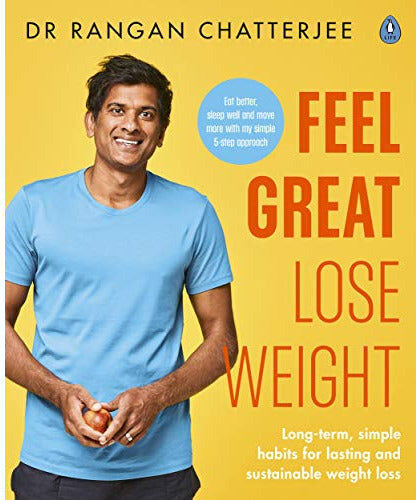
Penguin Feel Great Lose Weight: Long term, simple habits for lasting and sustainable weight lossTHE LATEST BOOK FROM THE AUTHOR OF THE SUNDAY TIMES #1 BESTSELLER FEEL BETTER IN 5'This is not a diet book. This is a whole new way of looking at what, why and how we eat and helps you design your own plan to build a better, healthier relationship with food' Fearne Cotton'A book with practical simple tips for everyone!' Tim Spector'It is a beautiful book and has so much in it to help us feel good and prioritise our happiness and health' Dr Gemma Newman'One of the most influential doctors in the country' Chris Evans _________________________________________________________________________It's more important than ever before that we get in shape, stay healthy and live well - Dr Chatterjee is back to show you how. Weight loss isn't a race. It isn't one size fits all. Drawing on twenty years of experience as a GP, Dr Rangan Chatterjee has created a conscious, long-lasting approach to weight loss that goes far beyond fad diets and helps to find the best solutions that work for you. Packed with quick and easy interventions this book will help you: 1. Understand the effects of what, why, when, where and how we eat2. Discover the root cause of your weight gain3. Nourish your body without any crash diets or gruelling workouts 4. Build a toolbox of techniques to help you lose weight, for goodWith Feel Great, Lose Weight you can make sustainable, medically-approved lifestyle changes and become a more energised, confident and healthy you. _________________________________________________________________________ 'A blame-free book' Telegraph'This book is extremely practical, insightful and easy-to-follow' The Happy Pears12,95 £*Shipping: 2,99 £Secure redirect to the provider



-
Will there be hyperinflation again in 2023 like in 1923?
It is unlikely that there will be hyperinflation on the scale of 1923 in 2023. The conditions that led to hyperinflation in 1923, such as war reparations and a collapse in confidence in the currency, are not present in the current global economic environment. Central banks and governments have also learned from past mistakes and have tools in place to manage inflation. However, it is important to monitor economic conditions and policies to ensure that inflation remains under control. **
-
How long do you have to own stocks to receive dividends?
To receive dividends, you typically need to own the stocks before the ex-dividend date. This means you need to own the stocks at least one business day before the record date, which is the date set by the company to determine which shareholders are eligible to receive dividends. The exact timing can vary depending on the company and the specific dividend payment schedule. **
-
Why is there no hyperinflation nowadays when money is being printed?
There are several reasons why there is no hyperinflation despite the increase in money supply. First, the velocity of money, or the rate at which money is exchanged for goods and services, has decreased due to the economic slowdown caused by the pandemic. This means that the newly printed money is not circulating as quickly, reducing its inflationary impact. Additionally, central banks have implemented measures to prevent excessive inflation, such as keeping interest rates low and implementing quantitative easing programs in a controlled manner. Finally, there is a lack of strong demand-pull inflationary pressures due to high unemployment and reduced consumer spending. Overall, these factors have helped to mitigate the risk of hyperinflation despite the increase in money supply. **
-
What happened in the crisis year 1923 in relation to hyperinflation?
In 1923, Germany experienced hyperinflation, which was a result of the economic turmoil following World War I. The value of the German mark plummeted, leading to skyrocketing prices for goods and services. This hyperinflation caused severe economic hardship for the German people, wiping out their savings and causing widespread poverty. The crisis was eventually stabilized with the introduction of a new currency, the Rentenmark, and the implementation of economic reforms under the Dawes Plan. **

How much did a loaf of bread cost during the hyperinflation?
During the hyperinflation in Germany in the early 1920s, the cost of a loaf of bread skyrocketed to astronomical levels. At the peak of hyperinflation in 1923, a loaf of bread could cost billions or even trillions of German marks. The hyperinflation was so severe that people had to carry wheelbarrows full of money just to buy basic necessities like bread. This period of hyperinflation had a devastating impact on the German economy and society. **
Are we facing another hyperinflation? What would be necessary for that to happen?
It is difficult to predict whether we are facing another hyperinflation as it depends on various economic factors. Hyperinflation occurs when there is a rapid and uncontrollable increase in the prices of goods and services. This can happen if there is a significant increase in the money supply without a corresponding increase in the production of goods and services, leading to a decrease in the value of the currency. To prevent hyperinflation, central banks need to carefully manage the money supply and ensure that it is in line with the overall economic growth. **
Top-Angebote
Products related to Hyperinflation:
-
KALATY Portfolio Storm Gray HandMade Area RugWelcome guests to your home with the rich grey pattern and hand-woven design of this runner rug. Made of premium wool and Silkette, this runner is durable yet also has a lovely transitional style.595,99 $*Shipping: 0,00 $Secure redirect to the provider
-
Has there ever been hyperinflation in Germany?
Yes, Germany experienced hyperinflation in the early 1920s, particularly in 1923. This hyperinflation was a result of the economic turmoil following World War I and the government's decision to print large amounts of money to pay off war debts. The hyperinflation led to a rapid devaluation of the German mark, causing prices to skyrocket and leading to severe economic hardship for the German people. This period of hyperinflation had a lasting impact on the country's economy and contributed to the social and political instability of the time. **
-
Why is no one doing anything about the hyperinflation?
There are several reasons why no one is effectively addressing hyperinflation in some countries. First, hyperinflation is often a result of deep-seated economic and political issues that are difficult to resolve quickly. Second, government corruption and mismanagement can exacerbate hyperinflation, making it challenging to implement effective policies. Third, international intervention can be limited by concerns about sovereignty and the potential for backlash from the affected country. Finally, addressing hyperinflation often requires painful economic reforms and adjustments that can be politically unpopular and difficult to implement. **
-
Will there be hyperinflation again in 2023 like in 1923?
It is unlikely that there will be hyperinflation on the scale of 1923 in 2023. The conditions that led to hyperinflation in 1923, such as war reparations and a collapse in confidence in the currency, are not present in the current global economic environment. Central banks and governments have also learned from past mistakes and have tools in place to manage inflation. However, it is important to monitor economic conditions and policies to ensure that inflation remains under control. **
-
How long do you have to own stocks to receive dividends?
To receive dividends, you typically need to own the stocks before the ex-dividend date. This means you need to own the stocks at least one business day before the record date, which is the date set by the company to determine which shareholders are eligible to receive dividends. The exact timing can vary depending on the company and the specific dividend payment schedule. **
Similar search terms for Hyperinflation
-
Penguin Feel Great Lose Weight: Long term, simple habits for lasting and sustainable weight lossTHE LATEST BOOK FROM THE AUTHOR OF THE SUNDAY TIMES #1 BESTSELLER FEEL BETTER IN 5'This is not a diet book. This is a whole new way of looking at what, why and how we eat and helps you design your own plan to build a better, healthier relationship with food' Fearne Cotton'A book with practical simple tips for everyone!' Tim Spector'It is a beautiful book and has so much in it to help us feel good and prioritise our happiness and health' Dr Gemma Newman'One of the most influential doctors in the country' Chris Evans _________________________________________________________________________It's more important than ever before that we get in shape, stay healthy and live well - Dr Chatterjee is back to show you how. Weight loss isn't a race. It isn't one size fits all. Drawing on twenty years of experience as a GP, Dr Rangan Chatterjee has created a conscious, long-lasting approach to weight loss that goes far beyond fad diets and helps to find the best solutions that work for you. Packed with quick and easy interventions this book will help you: 1. Understand the effects of what, why, when, where and how we eat2. Discover the root cause of your weight gain3. Nourish your body without any crash diets or gruelling workouts 4. Build a toolbox of techniques to help you lose weight, for goodWith Feel Great, Lose Weight you can make sustainable, medically-approved lifestyle changes and become a more energised, confident and healthy you. _________________________________________________________________________ 'A blame-free book' Telegraph'This book is extremely practical, insightful and easy-to-follow' The Happy Pears12,95 £*Shipping: 2,99 £Secure redirect to the provider
-
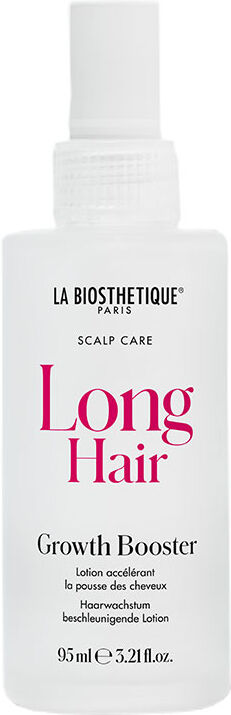
La Biosthetique Long Hair Growth Booster 95mlLa Biosthetique Long Hair Growth Booster is a potent formula to encourage healthy hair growth by targeting the roots. Keratin building blocks stimulate the hair roots, while an energy mix of glycogen and creatine significantly increases their cell activity*. This increases the hair’s growth rate by 67%**. Trace elements from coral and biotin result in healthy growth and boost the formation of stable, strong hair.Enriched with Wheat bran extract to help reduce the deposition of pollution particles on the scalp promoting a healthy scalp and healthy hair. *According to an in vitro study, the cell division rate increases by more than 98% compared to a placebo solution, source: BASF AG raw materials documentation **Result of a clinical study compared to a placebo solution, source: Sederma GmbH Key Ingredients • The keratin building blocks arginine, lysine and aspartic acid • Energy mix of glycogen and creatine • Trace elements of coral and biotin • Apigenin, oleanolic acid, Vitamin B12 • Wheat bran extract63,25 £*Shipping: 0,00 £Secure redirect to the provider
-
Lush Living Finds Perfect Soft Big Toe Corrector For Night Use, Long Term Comfort At Home skin ColorRelieve Toe Pain with Soft Big Toe Corrector Looking for a way to soothe and relieve discomfort in your toes The Soft Big Toe Corrector is the perfect solution for night and home use, providing longterm comfort while you relax. Crafted with soft,...34,97 $*Shipping: 0,00 $Secure redirect to the provider
-
Why is there no hyperinflation nowadays when money is being printed?
There are several reasons why there is no hyperinflation despite the increase in money supply. First, the velocity of money, or the rate at which money is exchanged for goods and services, has decreased due to the economic slowdown caused by the pandemic. This means that the newly printed money is not circulating as quickly, reducing its inflationary impact. Additionally, central banks have implemented measures to prevent excessive inflation, such as keeping interest rates low and implementing quantitative easing programs in a controlled manner. Finally, there is a lack of strong demand-pull inflationary pressures due to high unemployment and reduced consumer spending. Overall, these factors have helped to mitigate the risk of hyperinflation despite the increase in money supply. **
-
What happened in the crisis year 1923 in relation to hyperinflation?
In 1923, Germany experienced hyperinflation, which was a result of the economic turmoil following World War I. The value of the German mark plummeted, leading to skyrocketing prices for goods and services. This hyperinflation caused severe economic hardship for the German people, wiping out their savings and causing widespread poverty. The crisis was eventually stabilized with the introduction of a new currency, the Rentenmark, and the implementation of economic reforms under the Dawes Plan. **
-
How much did a loaf of bread cost during the hyperinflation?
During the hyperinflation in Germany in the early 1920s, the cost of a loaf of bread skyrocketed to astronomical levels. At the peak of hyperinflation in 1923, a loaf of bread could cost billions or even trillions of German marks. The hyperinflation was so severe that people had to carry wheelbarrows full of money just to buy basic necessities like bread. This period of hyperinflation had a devastating impact on the German economy and society. **
-
Are we facing another hyperinflation? What would be necessary for that to happen?
It is difficult to predict whether we are facing another hyperinflation as it depends on various economic factors. Hyperinflation occurs when there is a rapid and uncontrollable increase in the prices of goods and services. This can happen if there is a significant increase in the money supply without a corresponding increase in the production of goods and services, leading to a decrease in the value of the currency. To prevent hyperinflation, central banks need to carefully manage the money supply and ensure that it is in line with the overall economic growth. **
* All prices are inclusive of VAT and, if applicable, plus shipping costs. The offer information is based on the details provided by the respective shop and is updated through automated processes. Real-time updates do not occur, so deviations can occur in individual cases. ** Note: Parts of this content were created by AI.