Buy valueinvesting.eu ?
We are moving the project
valueinvesting.eu .
Are you interested in purchasing the domain
valueinvesting.eu ?
domain@kv-gmbh.de · 0541-91531010
Buy valueinvesting.eu ?
Are halogenoalkanes nonpolar?
Halogenoalkanes are generally considered to be polar molecules. This is because the carbon-halogen bond is polar due to the difference in electronegativity between carbon and the halogen atom. The halogen atom is more electronegative than carbon, causing a partial negative charge on the halogen and a partial positive charge on the carbon. This uneven distribution of charge results in a polar molecule. **
What are halogenoalkanes?
Halogenoalkanes, also known as alkyl halides, are organic compounds that contain one or more halogen atoms (fluorine, chlorine, bromine, or iodine) bonded to an alkane carbon chain. The general formula for halogenoalkanes is R-X, where R represents the alkyl group and X represents the halogen atom. These compounds are widely used in organic synthesis, as solvents, and as intermediates in the production of various chemicals. Halogenoalkanes are classified based on the number of halogen atoms attached to the alkane carbon chain, such as mono-, di-, or polyhalogenoalkanes. **


Similar search terms for Halogenoalkanes
Top-Angebote
Products related to Halogenoalkanes:
-
KALATY Portfolio Storm Gray HandMade Area RugWelcome guests to your home with the rich grey pattern and hand-woven design of this runner rug. Made of premium wool and Silkette, this runner is durable yet also has a lovely transitional style.595,99 $*Shipping: 0,00 $Secure redirect to the provider
-
Penguin Feel Great Lose Weight: Long term, simple habits for lasting and sustainable weight lossTHE LATEST BOOK FROM THE AUTHOR OF THE SUNDAY TIMES #1 BESTSELLER FEEL BETTER IN 5'This is not a diet book. This is a whole new way of looking at what, why and how we eat and helps you design your own plan to build a better, healthier relationship with food' Fearne Cotton'A book with practical simple tips for everyone!' Tim Spector'It is a beautiful book and has so much in it to help us feel good and prioritise our happiness and health' Dr Gemma Newman'One of the most influential doctors in the country' Chris Evans _________________________________________________________________________It's more important than ever before that we get in shape, stay healthy and live well - Dr Chatterjee is back to show you how. Weight loss isn't a race. It isn't one size fits all. Drawing on twenty years of experience as a GP, Dr Rangan Chatterjee has created a conscious, long-lasting approach to weight loss that goes far beyond fad diets and helps to find the best solutions that work for you. Packed with quick and easy interventions this book will help you: 1. Understand the effects of what, why, when, where and how we eat2. Discover the root cause of your weight gain3. Nourish your body without any crash diets or gruelling workouts 4. Build a toolbox of techniques to help you lose weight, for goodWith Feel Great, Lose Weight you can make sustainable, medically-approved lifestyle changes and become a more energised, confident and healthy you. _________________________________________________________________________ 'A blame-free book' Telegraph'This book is extremely practical, insightful and easy-to-follow' The Happy Pears12,95 £*Shipping: 2,99 £Secure redirect to the provider




-
Why are halogenoalkanes gaseous?
Halogenoalkanes are gaseous at room temperature because they have relatively weak intermolecular forces. The halogen atoms in halogenoalkanes are larger and more polarizable than other atoms, which leads to weaker van der Waals forces between molecules. As a result, halogenoalkanes have lower boiling points and are more likely to exist as gases at room temperature compared to other types of organic compounds. **
-
What is the nomenclature of halogenoalkanes?
Halogenoalkanes are named using the IUPAC system, where the halogen atom is treated as a substituent on an alkane chain. The halogen is named as a prefix (fluoro-, chloro-, bromo-, iodo-) followed by the alkane name indicating the number of carbon atoms in the longest chain. The position of the halogen atom is indicated by the number of the carbon atom it is attached to, starting from the end nearest to the halogen. If there are multiple halogen atoms, the positions are indicated by numbers separated by commas. **
-
What is the solubility of halogenoalkanes?
The solubility of halogenoalkanes, also known as alkyl halides, varies depending on the specific compound and the solvent. Generally, halogenoalkanes are not very soluble in water due to their non-polar nature and the strong dipole-dipole interactions between the halogen and the alkyl group. However, they are more soluble in organic solvents such as dichloromethane, chloroform, and ether due to their similar non-polar nature. The solubility of halogenoalkanes can also be influenced by the size and structure of the alkyl group and the type of halogen present in the molecule. **
-
Why was the use of halogenoalkanes heavily restricted?
The use of halogenoalkanes was heavily restricted due to their harmful effects on the environment and human health. Halogenoalkanes are known to be persistent organic pollutants that can bioaccumulate in the food chain, leading to long-term environmental damage. Additionally, some halogenoalkanes have been linked to ozone depletion and global warming. Therefore, restrictions were put in place to minimize their release into the environment and protect both ecosystems and human health. **

How can the proof of halogenoalkanes be provided?
The proof of halogenoalkanes can be provided through various chemical tests and reactions. One common test is the silver nitrate test, where halogenoalkanes react with silver nitrate to form a precipitate of silver halide. The color of the precipitate can help identify the specific halogen present in the halogenoalkane. Another test is the sodium hydroxide test, where halogenoalkanes react with sodium hydroxide to form a precipitate of the corresponding halide ion. Additionally, halogenoalkanes can undergo nucleophilic substitution reactions, where the halogen is replaced by a nucleophile, providing further evidence of their presence. **
How are halogenoalkanes broken down in the atmosphere?
Halogenoalkanes are broken down in the atmosphere through a process called photolysis, which is the breaking down of molecules by sunlight. When halogenoalkanes are exposed to sunlight, the carbon-halogen bond is broken, releasing a halogen atom. This free halogen atom can then react with ozone in the atmosphere, leading to the depletion of the ozone layer. This process contributes to environmental issues such as ozone depletion and global warming. **
Top-Angebote
Products related to Halogenoalkanes:
-
KALATY Portfolio Storm Gray HandMade Area RugWelcome guests to your home with the rich grey pattern and hand-woven design of this runner rug. Made of premium wool and Silkette, this runner is durable yet also has a lovely transitional style.595,99 $*Shipping: 0,00 $Secure redirect to the provider
-
Are halogenoalkanes nonpolar?
Halogenoalkanes are generally considered to be polar molecules. This is because the carbon-halogen bond is polar due to the difference in electronegativity between carbon and the halogen atom. The halogen atom is more electronegative than carbon, causing a partial negative charge on the halogen and a partial positive charge on the carbon. This uneven distribution of charge results in a polar molecule. **
-
What are halogenoalkanes?
Halogenoalkanes, also known as alkyl halides, are organic compounds that contain one or more halogen atoms (fluorine, chlorine, bromine, or iodine) bonded to an alkane carbon chain. The general formula for halogenoalkanes is R-X, where R represents the alkyl group and X represents the halogen atom. These compounds are widely used in organic synthesis, as solvents, and as intermediates in the production of various chemicals. Halogenoalkanes are classified based on the number of halogen atoms attached to the alkane carbon chain, such as mono-, di-, or polyhalogenoalkanes. **
-
Why are halogenoalkanes gaseous?
Halogenoalkanes are gaseous at room temperature because they have relatively weak intermolecular forces. The halogen atoms in halogenoalkanes are larger and more polarizable than other atoms, which leads to weaker van der Waals forces between molecules. As a result, halogenoalkanes have lower boiling points and are more likely to exist as gases at room temperature compared to other types of organic compounds. **
-
What is the nomenclature of halogenoalkanes?
Halogenoalkanes are named using the IUPAC system, where the halogen atom is treated as a substituent on an alkane chain. The halogen is named as a prefix (fluoro-, chloro-, bromo-, iodo-) followed by the alkane name indicating the number of carbon atoms in the longest chain. The position of the halogen atom is indicated by the number of the carbon atom it is attached to, starting from the end nearest to the halogen. If there are multiple halogen atoms, the positions are indicated by numbers separated by commas. **
Similar search terms for Halogenoalkanes
-
Penguin Feel Great Lose Weight: Long term, simple habits for lasting and sustainable weight lossTHE LATEST BOOK FROM THE AUTHOR OF THE SUNDAY TIMES #1 BESTSELLER FEEL BETTER IN 5'This is not a diet book. This is a whole new way of looking at what, why and how we eat and helps you design your own plan to build a better, healthier relationship with food' Fearne Cotton'A book with practical simple tips for everyone!' Tim Spector'It is a beautiful book and has so much in it to help us feel good and prioritise our happiness and health' Dr Gemma Newman'One of the most influential doctors in the country' Chris Evans _________________________________________________________________________It's more important than ever before that we get in shape, stay healthy and live well - Dr Chatterjee is back to show you how. Weight loss isn't a race. It isn't one size fits all. Drawing on twenty years of experience as a GP, Dr Rangan Chatterjee has created a conscious, long-lasting approach to weight loss that goes far beyond fad diets and helps to find the best solutions that work for you. Packed with quick and easy interventions this book will help you: 1. Understand the effects of what, why, when, where and how we eat2. Discover the root cause of your weight gain3. Nourish your body without any crash diets or gruelling workouts 4. Build a toolbox of techniques to help you lose weight, for goodWith Feel Great, Lose Weight you can make sustainable, medically-approved lifestyle changes and become a more energised, confident and healthy you. _________________________________________________________________________ 'A blame-free book' Telegraph'This book is extremely practical, insightful and easy-to-follow' The Happy Pears12,95 £*Shipping: 2,99 £Secure redirect to the provider
-
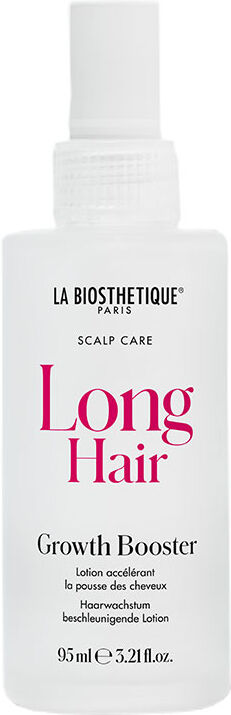
La Biosthetique Long Hair Growth Booster 95mlLa Biosthetique Long Hair Growth Booster is a potent formula to encourage healthy hair growth by targeting the roots. Keratin building blocks stimulate the hair roots, while an energy mix of glycogen and creatine significantly increases their cell activity*. This increases the hair’s growth rate by 67%**. Trace elements from coral and biotin result in healthy growth and boost the formation of stable, strong hair.Enriched with Wheat bran extract to help reduce the deposition of pollution particles on the scalp promoting a healthy scalp and healthy hair. *According to an in vitro study, the cell division rate increases by more than 98% compared to a placebo solution, source: BASF AG raw materials documentation **Result of a clinical study compared to a placebo solution, source: Sederma GmbH Key Ingredients • The keratin building blocks arginine, lysine and aspartic acid • Energy mix of glycogen and creatine • Trace elements of coral and biotin • Apigenin, oleanolic acid, Vitamin B12 • Wheat bran extract63,25 £*Shipping: 0,00 £Secure redirect to the provider
-
Lush Living Finds Perfect Soft Big Toe Corrector For Night Use, Long Term Comfort At Home skin ColorRelieve Toe Pain with Soft Big Toe Corrector Looking for a way to soothe and relieve discomfort in your toes The Soft Big Toe Corrector is the perfect solution for night and home use, providing longterm comfort while you relax. Crafted with soft,...34,97 $*Shipping: 0,00 $Secure redirect to the provider
-
What is the solubility of halogenoalkanes?
The solubility of halogenoalkanes, also known as alkyl halides, varies depending on the specific compound and the solvent. Generally, halogenoalkanes are not very soluble in water due to their non-polar nature and the strong dipole-dipole interactions between the halogen and the alkyl group. However, they are more soluble in organic solvents such as dichloromethane, chloroform, and ether due to their similar non-polar nature. The solubility of halogenoalkanes can also be influenced by the size and structure of the alkyl group and the type of halogen present in the molecule. **
-
Why was the use of halogenoalkanes heavily restricted?
The use of halogenoalkanes was heavily restricted due to their harmful effects on the environment and human health. Halogenoalkanes are known to be persistent organic pollutants that can bioaccumulate in the food chain, leading to long-term environmental damage. Additionally, some halogenoalkanes have been linked to ozone depletion and global warming. Therefore, restrictions were put in place to minimize their release into the environment and protect both ecosystems and human health. **
-
How can the proof of halogenoalkanes be provided?
The proof of halogenoalkanes can be provided through various chemical tests and reactions. One common test is the silver nitrate test, where halogenoalkanes react with silver nitrate to form a precipitate of silver halide. The color of the precipitate can help identify the specific halogen present in the halogenoalkane. Another test is the sodium hydroxide test, where halogenoalkanes react with sodium hydroxide to form a precipitate of the corresponding halide ion. Additionally, halogenoalkanes can undergo nucleophilic substitution reactions, where the halogen is replaced by a nucleophile, providing further evidence of their presence. **
-
How are halogenoalkanes broken down in the atmosphere?
Halogenoalkanes are broken down in the atmosphere through a process called photolysis, which is the breaking down of molecules by sunlight. When halogenoalkanes are exposed to sunlight, the carbon-halogen bond is broken, releasing a halogen atom. This free halogen atom can then react with ozone in the atmosphere, leading to the depletion of the ozone layer. This process contributes to environmental issues such as ozone depletion and global warming. **
* All prices are inclusive of VAT and, if applicable, plus shipping costs. The offer information is based on the details provided by the respective shop and is updated through automated processes. Real-time updates do not occur, so deviations can occur in individual cases. ** Note: Parts of this content were created by AI.