Buy valueinvesting.eu ?
We are moving the project
valueinvesting.eu .
Are you interested in purchasing the domain
valueinvesting.eu ?
domain@kv-gmbh.de · 0541-91531010
Buy valueinvesting.eu ?
What does the term "Location Particle" mean?
A location particle is a word or morpheme that indicates the location or direction of an action or state. In some languages, location particles are used to show the position of an object in relation to another object or to indicate the direction of movement. These particles are essential for conveying spatial relationships and are often a key component of the grammar and syntax of a language. Examples of location particles include "in," "on," "under," "behind," "towards," and "away from." **
What is the particle model and what is the tau particle?
The particle model is a scientific theory that describes the behavior and interactions of subatomic particles. It explains the properties of particles such as their mass, charge, and spin, and how they interact with each other through fundamental forces. The tau particle is a type of subatomic particle that belongs to the lepton family, along with the electron and the muon. It is similar to the electron but is much heavier and has a shorter lifespan. The tau particle is involved in weak interactions and is produced in high-energy particle collisions, such as those that occur in particle accelerators. Its discovery in 1975 provided further evidence for the existence of the third generation of fundamental particles. **
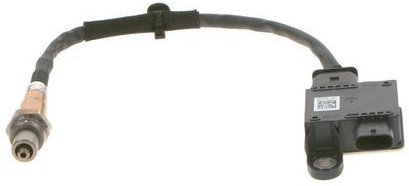

Similar search terms for AMPRO-A103PM0408-Particle-Sensor
Top-Angebote
Products related to AMPRO-A103PM0408-Particle-Sensor:
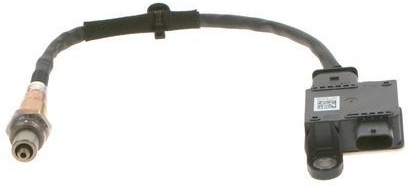


-
What are particle pronouns?
Particle pronouns are pronouns that are used in combination with a preposition to indicate a specific relationship or direction. They are typically used to show the relationship between the subject or object of a sentence and other elements in the sentence. In English, common particle pronouns include words like "me," "him," "her," "us," and "them." These pronouns are essential for conveying precise meaning and clarity in communication. **
-
Is today a particle?
No, today is not a particle. Today is a concept that represents the current day in the calendar. Particles are tiny units of matter that make up everything in the universe. Today is a human construct used to organize time and events. **
-
How long do you have to own stocks to receive dividends?
To receive dividends, you typically need to own the stocks before the ex-dividend date. This means you need to own the stocks at least one business day before the record date, which is the date set by the company to determine which shareholders are eligible to receive dividends. The exact timing can vary depending on the company and the specific dividend payment schedule. **
-
What is the particle model?
The particle model is a scientific concept used to describe the behavior and properties of matter at the atomic and molecular level. It suggests that all matter is made up of tiny particles that are constantly in motion. These particles have spaces between them and interact with each other through forces such as attraction and repulsion. The particle model helps explain various phenomena in physics and chemistry, such as changes in state, diffusion, and the behavior of gases. **


Is 0 a virtual particle?
No, 0 is not a virtual particle. Virtual particles are particles that exist temporarily as intermediate states in particle interactions, but they do not correspond to real, observable particles. In contrast, 0 is a number that represents the absence of quantity or value, and it does not have the properties of a particle. **
What is the particle koto?
The particle "koto" in Japanese is used to nominalize a verb or a clause, turning it into a noun. It is often translated as "thing" or "fact" in English. For example, the phrase "taberu koto" would mean "the act of eating" or "eating" as a noun. It is commonly used to express abstract concepts or actions as concrete nouns in Japanese sentences. **
Top-Angebote
Products related to AMPRO-A103PM0408-Particle-Sensor:
-
What does the term "Location Particle" mean?
A location particle is a word or morpheme that indicates the location or direction of an action or state. In some languages, location particles are used to show the position of an object in relation to another object or to indicate the direction of movement. These particles are essential for conveying spatial relationships and are often a key component of the grammar and syntax of a language. Examples of location particles include "in," "on," "under," "behind," "towards," and "away from." **
-
What is the particle model and what is the tau particle?
The particle model is a scientific theory that describes the behavior and interactions of subatomic particles. It explains the properties of particles such as their mass, charge, and spin, and how they interact with each other through fundamental forces. The tau particle is a type of subatomic particle that belongs to the lepton family, along with the electron and the muon. It is similar to the electron but is much heavier and has a shorter lifespan. The tau particle is involved in weak interactions and is produced in high-energy particle collisions, such as those that occur in particle accelerators. Its discovery in 1975 provided further evidence for the existence of the third generation of fundamental particles. **
-
What are particle pronouns?
Particle pronouns are pronouns that are used in combination with a preposition to indicate a specific relationship or direction. They are typically used to show the relationship between the subject or object of a sentence and other elements in the sentence. In English, common particle pronouns include words like "me," "him," "her," "us," and "them." These pronouns are essential for conveying precise meaning and clarity in communication. **
-
Is today a particle?
No, today is not a particle. Today is a concept that represents the current day in the calendar. Particles are tiny units of matter that make up everything in the universe. Today is a human construct used to organize time and events. **
Similar search terms for AMPRO-A103PM0408-Particle-Sensor
-
AMPRO A103PM0608 Particle SensorConnector Shape: oval; TecDoc Engine Number: 22149, 25841, 25843, 24544, 24545, 34688, 35871, 39910; Construction Year from: 04/2009, 03/2012, 04/2014, 07/2015, 05/2016, 10/2016, 10/2018, 06/2018, 03/2018, 04/2019, 11/2019, 11/2020, 01/2022; Component Number: 13O; Construction Year to: 12/2013, 12/2017, 03/2019149,99 £*Shipping: 1,99 £Secure redirect to the provider
-
How long do you have to own stocks to receive dividends?
To receive dividends, you typically need to own the stocks before the ex-dividend date. This means you need to own the stocks at least one business day before the record date, which is the date set by the company to determine which shareholders are eligible to receive dividends. The exact timing can vary depending on the company and the specific dividend payment schedule. **
-
What is the particle model?
The particle model is a scientific concept used to describe the behavior and properties of matter at the atomic and molecular level. It suggests that all matter is made up of tiny particles that are constantly in motion. These particles have spaces between them and interact with each other through forces such as attraction and repulsion. The particle model helps explain various phenomena in physics and chemistry, such as changes in state, diffusion, and the behavior of gases. **
-
Is 0 a virtual particle?
No, 0 is not a virtual particle. Virtual particles are particles that exist temporarily as intermediate states in particle interactions, but they do not correspond to real, observable particles. In contrast, 0 is a number that represents the absence of quantity or value, and it does not have the properties of a particle. **
-
What is the particle koto?
The particle "koto" in Japanese is used to nominalize a verb or a clause, turning it into a noun. It is often translated as "thing" or "fact" in English. For example, the phrase "taberu koto" would mean "the act of eating" or "eating" as a noun. It is commonly used to express abstract concepts or actions as concrete nouns in Japanese sentences. **
* All prices are inclusive of VAT and, if applicable, plus shipping costs. The offer information is based on the details provided by the respective shop and is updated through automated processes. Real-time updates do not occur, so deviations can occur in individual cases. ** Note: Parts of this content were created by AI.