Buy valueinvesting.eu ?
We are moving the project
valueinvesting.eu .
Are you interested in purchasing the domain
valueinvesting.eu ?
domain@kv-gmbh.de · 0541-91531010
Buy valueinvesting.eu ?
What is ratio analysis?
Ratio analysis is a method of evaluating the financial performance of a company by analyzing the relationships between different financial variables. It involves calculating and interpreting various ratios such as liquidity ratios, profitability ratios, and solvency ratios to assess the company's financial health and performance. Ratio analysis helps in identifying the strengths and weaknesses of a company, comparing its performance with industry benchmarks, and making informed decisions about investments or lending. It provides valuable insights into the company's operational efficiency, profitability, and overall financial stability. **
Why is the P/E ratio very high for some stocks in the short term?
The P/E ratio can be very high for some stocks in the short term due to a variety of factors. One reason could be a surge in the stock price without a corresponding increase in earnings, leading to a higher ratio. This could be due to market speculation, hype, or a sudden increase in demand for the stock. Additionally, if a company's earnings have been temporarily depressed due to one-time expenses or losses, the P/E ratio may appear high in the short term. Finally, if a company is expected to have significant future earnings growth, investors may be willing to pay a premium for the stock, leading to a high P/E ratio in the short term. **


Similar search terms for Ratio
Top-Angebote
Products related to Ratio:
-
Penguin Feel Great Lose Weight: Long term, simple habits for lasting and sustainable weight lossTHE LATEST BOOK FROM THE AUTHOR OF THE SUNDAY TIMES #1 BESTSELLER FEEL BETTER IN 5'This is not a diet book. This is a whole new way of looking at what, why and how we eat and helps you design your own plan to build a better, healthier relationship with food' Fearne Cotton'A book with practical simple tips for everyone!' Tim Spector'It is a beautiful book and has so much in it to help us feel good and prioritise our happiness and health' Dr Gemma Newman'One of the most influential doctors in the country' Chris Evans _________________________________________________________________________It's more important than ever before that we get in shape, stay healthy and live well - Dr Chatterjee is back to show you how. Weight loss isn't a race. It isn't one size fits all. Drawing on twenty years of experience as a GP, Dr Rangan Chatterjee has created a conscious, long-lasting approach to weight loss that goes far beyond fad diets and helps to find the best solutions that work for you. Packed with quick and easy interventions this book will help you: 1. Understand the effects of what, why, when, where and how we eat2. Discover the root cause of your weight gain3. Nourish your body without any crash diets or gruelling workouts 4. Build a toolbox of techniques to help you lose weight, for goodWith Feel Great, Lose Weight you can make sustainable, medically-approved lifestyle changes and become a more energised, confident and healthy you. _________________________________________________________________________ 'A blame-free book' Telegraph'This book is extremely practical, insightful and easy-to-follow' The Happy Pears12,95 £*Shipping: 2,99 £Secure redirect to the provider
-
Lush Living Finds Perfect Soft Big Toe Corrector For Night Use, Long Term Comfort At Home skin ColorRelieve Toe Pain with Soft Big Toe Corrector Looking for a way to soothe and relieve discomfort in your toes The Soft Big Toe Corrector is the perfect solution for night and home use, providing longterm comfort while you relax. Crafted with soft,...34,97 $*Shipping: 0,00 $Secure redirect to the provider
-
Healfit Counter Soft Big Toe Corrector, Perfect For Night And Home Use, Long term Relief From Bunions whiteDiscover lasting comfort and support with our 2pcs Soft Big Toe Correctoryour gentle, nonsurgical solution to get relief from bunions. Designed for both night and home use, this toe straightener delivers longterm comfort and alignment benefits in a...21,97 $*Shipping: 0,00 $Secure redirect to the provider




-
What is the proportional three-term ratio?
The proportional three-term ratio is a comparison of three quantities in which the ratio of the first to the second is equal to the ratio of the second to the third. In other words, if a/b = c/d = e/f, then a, b, and c are said to be in a proportional three-term ratio. This type of ratio is often used in mathematics and can be used to solve various problems involving proportions and comparisons of quantities. **
-
What is the meaning of the asset coverage ratio I and II?
The asset coverage ratio I is a financial metric that measures a company's ability to cover its debt obligations with its assets. It is calculated by dividing a company's total assets by its total liabilities. A higher asset coverage ratio I indicates a stronger ability to cover debt. The asset coverage ratio II is a more conservative version of the asset coverage ratio I. It excludes certain intangible assets and focuses on tangible assets that can be easily liquidated in case of financial distress. This ratio provides a more realistic assessment of a company's ability to cover its debt obligations with its tangible assets. **
-
What is the significance of the fixed asset coverage ratio I and II?
The fixed asset coverage ratio I and II are important financial metrics that help assess a company's ability to cover its long-term debt obligations using its fixed assets. These ratios provide insight into the company's financial health and its ability to meet its debt obligations. A higher fixed asset coverage ratio indicates a stronger ability to cover debt payments, while a lower ratio may signal potential financial risk. Monitoring these ratios can help investors and creditors evaluate a company's financial stability and make informed decisions. **
-
How long do you have to own stocks to receive dividends?
To receive dividends, you typically need to own the stocks before the ex-dividend date. This means you need to own the stocks at least one business day before the record date, which is the date set by the company to determine which shareholders are eligible to receive dividends. The exact timing can vary depending on the company and the specific dividend payment schedule. **

How to determine the conversion ratio z in quantitative analysis?
The conversion ratio, denoted as z, in quantitative analysis can be determined by comparing the amount of reactants consumed to the amount of products formed in a chemical reaction. This can be done by using stoichiometry, which involves balancing the chemical equation and calculating the mole ratios of reactants and products. By knowing the initial amount of reactants and the final amount of products, one can calculate the conversion ratio z by dividing the actual yield of the product by the theoretical yield based on stoichiometry. **
How to achieve the conversion ratio z in quantitative analysis?
To achieve the conversion ratio z in quantitative analysis, one must carefully design and execute experiments or studies that are focused on the specific variables of interest. This involves collecting accurate and relevant data, ensuring the sample size is sufficient for statistical significance, and using appropriate analytical techniques to analyze the data. Additionally, it is important to consider potential confounding variables and control for them in order to isolate the effect of the variables being studied. By following these steps and conducting rigorous quantitative analysis, one can achieve the desired conversion ratio z. **
Top-Angebote
Products related to Ratio:
-
Penguin Feel Great Lose Weight: Long term, simple habits for lasting and sustainable weight lossTHE LATEST BOOK FROM THE AUTHOR OF THE SUNDAY TIMES #1 BESTSELLER FEEL BETTER IN 5'This is not a diet book. This is a whole new way of looking at what, why and how we eat and helps you design your own plan to build a better, healthier relationship with food' Fearne Cotton'A book with practical simple tips for everyone!' Tim Spector'It is a beautiful book and has so much in it to help us feel good and prioritise our happiness and health' Dr Gemma Newman'One of the most influential doctors in the country' Chris Evans _________________________________________________________________________It's more important than ever before that we get in shape, stay healthy and live well - Dr Chatterjee is back to show you how. Weight loss isn't a race. It isn't one size fits all. Drawing on twenty years of experience as a GP, Dr Rangan Chatterjee has created a conscious, long-lasting approach to weight loss that goes far beyond fad diets and helps to find the best solutions that work for you. Packed with quick and easy interventions this book will help you: 1. Understand the effects of what, why, when, where and how we eat2. Discover the root cause of your weight gain3. Nourish your body without any crash diets or gruelling workouts 4. Build a toolbox of techniques to help you lose weight, for goodWith Feel Great, Lose Weight you can make sustainable, medically-approved lifestyle changes and become a more energised, confident and healthy you. _________________________________________________________________________ 'A blame-free book' Telegraph'This book is extremely practical, insightful and easy-to-follow' The Happy Pears12,95 £*Shipping: 2,99 £Secure redirect to the provider
-
What is ratio analysis?
Ratio analysis is a method of evaluating the financial performance of a company by analyzing the relationships between different financial variables. It involves calculating and interpreting various ratios such as liquidity ratios, profitability ratios, and solvency ratios to assess the company's financial health and performance. Ratio analysis helps in identifying the strengths and weaknesses of a company, comparing its performance with industry benchmarks, and making informed decisions about investments or lending. It provides valuable insights into the company's operational efficiency, profitability, and overall financial stability. **
-
Why is the P/E ratio very high for some stocks in the short term?
The P/E ratio can be very high for some stocks in the short term due to a variety of factors. One reason could be a surge in the stock price without a corresponding increase in earnings, leading to a higher ratio. This could be due to market speculation, hype, or a sudden increase in demand for the stock. Additionally, if a company's earnings have been temporarily depressed due to one-time expenses or losses, the P/E ratio may appear high in the short term. Finally, if a company is expected to have significant future earnings growth, investors may be willing to pay a premium for the stock, leading to a high P/E ratio in the short term. **
-
What is the proportional three-term ratio?
The proportional three-term ratio is a comparison of three quantities in which the ratio of the first to the second is equal to the ratio of the second to the third. In other words, if a/b = c/d = e/f, then a, b, and c are said to be in a proportional three-term ratio. This type of ratio is often used in mathematics and can be used to solve various problems involving proportions and comparisons of quantities. **
-
What is the meaning of the asset coverage ratio I and II?
The asset coverage ratio I is a financial metric that measures a company's ability to cover its debt obligations with its assets. It is calculated by dividing a company's total assets by its total liabilities. A higher asset coverage ratio I indicates a stronger ability to cover debt. The asset coverage ratio II is a more conservative version of the asset coverage ratio I. It excludes certain intangible assets and focuses on tangible assets that can be easily liquidated in case of financial distress. This ratio provides a more realistic assessment of a company's ability to cover its debt obligations with its tangible assets. **
Similar search terms for Ratio
-
Lush Living Finds Perfect Soft Big Toe Corrector For Night Use, Long Term Comfort At Home skin ColorRelieve Toe Pain with Soft Big Toe Corrector Looking for a way to soothe and relieve discomfort in your toes The Soft Big Toe Corrector is the perfect solution for night and home use, providing longterm comfort while you relax. Crafted with soft,...34,97 $*Shipping: 0,00 $Secure redirect to the provider
-
Healfit Counter Soft Big Toe Corrector, Perfect For Night And Home Use, Long term Relief From Bunions whiteDiscover lasting comfort and support with our 2pcs Soft Big Toe Correctoryour gentle, nonsurgical solution to get relief from bunions. Designed for both night and home use, this toe straightener delivers longterm comfort and alignment benefits in a...21,97 $*Shipping: 0,00 $Secure redirect to the provider
-
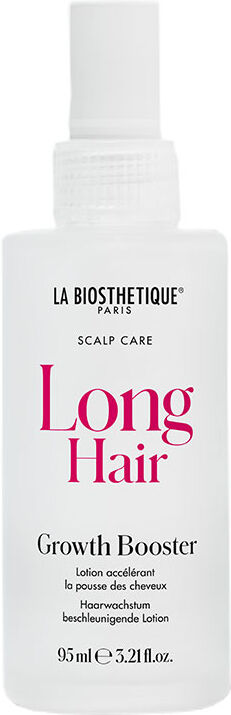
La Biosthetique Long Hair Growth Booster 95mlLa Biosthetique Long Hair Growth Booster is a potent formula to encourage healthy hair growth by targeting the roots. Keratin building blocks stimulate the hair roots, while an energy mix of glycogen and creatine significantly increases their cell activity*. This increases the hair’s growth rate by 67%**. Trace elements from coral and biotin result in healthy growth and boost the formation of stable, strong hair.Enriched with Wheat bran extract to help reduce the deposition of pollution particles on the scalp promoting a healthy scalp and healthy hair. *According to an in vitro study, the cell division rate increases by more than 98% compared to a placebo solution, source: BASF AG raw materials documentation **Result of a clinical study compared to a placebo solution, source: Sederma GmbH Key Ingredients • The keratin building blocks arginine, lysine and aspartic acid • Energy mix of glycogen and creatine • Trace elements of coral and biotin • Apigenin, oleanolic acid, Vitamin B12 • Wheat bran extract63,25 £*Shipping: 0,00 £Secure redirect to the provider
-
Portfolio Penguin Hooked: How to Build Habit-Forming Products by Nir EyalNir Eyal reveals how successful companies create products people can't put down - and how you can tooWhy do some products capture our attention while others flop? What makes us engage with certain things out of sheer habit? Is there an underlying pattern to how technologies hook us?Nir Eyal answers these questions (and many more) with the Hook Model - a four-step process that, when embedded into products, subtly encourages customer behaviour. Through consecutive "hook cycles," these products bring people back again and again without depending on costly advertising or aggressive messaging.Hooked is based on Eyal's years of research, consulting, and practical experience. He wrote the book he wished had been available to him as a start-up founder - not abstract theory, but a how-to guide for building better products. Hooked is written for product managers, designers, marketers, start-up founders, and anyone who seeks to understand how products influence our behaviour.Eyal provides readers with practical insights to create user habits that stick; actionable steps for building products people love; and riveting examples from the iPhone to Twitter, Pinterest and the Bible App.7,98 £*Shipping: 2,99 £Secure redirect to the provider
-
What is the significance of the fixed asset coverage ratio I and II?
The fixed asset coverage ratio I and II are important financial metrics that help assess a company's ability to cover its long-term debt obligations using its fixed assets. These ratios provide insight into the company's financial health and its ability to meet its debt obligations. A higher fixed asset coverage ratio indicates a stronger ability to cover debt payments, while a lower ratio may signal potential financial risk. Monitoring these ratios can help investors and creditors evaluate a company's financial stability and make informed decisions. **
-
How long do you have to own stocks to receive dividends?
To receive dividends, you typically need to own the stocks before the ex-dividend date. This means you need to own the stocks at least one business day before the record date, which is the date set by the company to determine which shareholders are eligible to receive dividends. The exact timing can vary depending on the company and the specific dividend payment schedule. **
-
How to determine the conversion ratio z in quantitative analysis?
The conversion ratio, denoted as z, in quantitative analysis can be determined by comparing the amount of reactants consumed to the amount of products formed in a chemical reaction. This can be done by using stoichiometry, which involves balancing the chemical equation and calculating the mole ratios of reactants and products. By knowing the initial amount of reactants and the final amount of products, one can calculate the conversion ratio z by dividing the actual yield of the product by the theoretical yield based on stoichiometry. **
-
How to achieve the conversion ratio z in quantitative analysis?
To achieve the conversion ratio z in quantitative analysis, one must carefully design and execute experiments or studies that are focused on the specific variables of interest. This involves collecting accurate and relevant data, ensuring the sample size is sufficient for statistical significance, and using appropriate analytical techniques to analyze the data. Additionally, it is important to consider potential confounding variables and control for them in order to isolate the effect of the variables being studied. By following these steps and conducting rigorous quantitative analysis, one can achieve the desired conversion ratio z. **
* All prices are inclusive of VAT and, if applicable, plus shipping costs. The offer information is based on the details provided by the respective shop and is updated through automated processes. Real-time updates do not occur, so deviations can occur in individual cases. ** Note: Parts of this content were created by AI.